The best museums and galleries of Cambridge - a member's guide
A curated member's guide to Cambridge's essential museums and galleries: what to see, when to go and what locals skip.
Cambridge rewards the curious. Beyond the colleges and cobblestones lies a concentration of collections that rivals cities ten times its size. This is not a city that shouts about its cultural assets. It assumes you will find them. For the professional who has recently relocated or the long-term resident who keeps meaning to look deeper, this guide covers the institutions that repay repeated visits, not just a single afternoon. What follows is deliberately selective. There are more museums here than a single guide can hold, but these eight represent the core of what makes Cambridge an underrated city for art, archaeology, and the history of ideas. Each entry includes practical orientation because knowing when to go is half the experience.
Fitzwilliam Museum
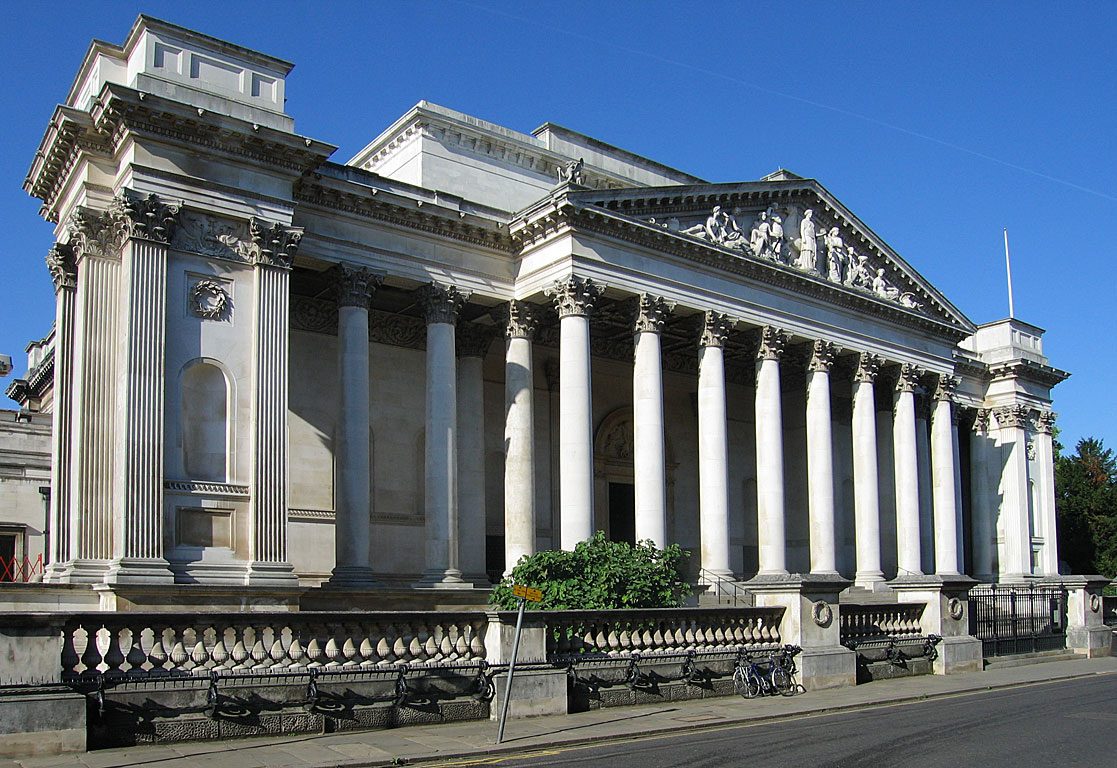
The Fitzwilliam is the gravitational centre of Cambridge's museum life, and it earns that status without the exhausting scale of a national museum in London. The building itself, a neoclassical pile on Trumpington Street, sets expectations that the collections inside consistently exceed.
The strongest reason to visit repeatedly is the paintings. The Italian Renaissance holdings are deep: Titian's Venus and Cupid with a Lute Player, Veronese's Hermes, Herse and Aglauros, Canaletto's precise Venetian views, and a Palma Vecchio Venus and Cupid that rewards slow looking. The Dutch Golden Age gallery, anchored by Jacob van Ruisdael's Landscape with Waterfall and Frans Hals's portrait studies, is intimate enough that you can stand in front of a single canvas without jostling. British painting runs from Hogarth's satirical Before and After through Gainsborough's Portrait of Mrs. Siddons and into the Pre-Raphaelites with a focus that feels curated rather than encyclopedic. The gallery of French Impressionism, though smaller, includes Monet's The Poplars and Degas's At the Café, works that would anchor any regional museum in Europe.
The antiquities collection is the other pole. Egyptian material includes the painted wooden coffin of Nespawershefyt, a 21st Dynasty supervisor of temple scribes, and funerary objects that predate the university itself by millennia. The Greek and Roman galleries hold a notable assemblage of Cycladic figurines from the third millennium BC, red-figure vases including the Pan Painter bell krater, and a Roman sarcophagus from the 2nd century AD with Dionysiac scenes whose carving still reads crisply after two thousand years. The illuminated manuscripts in the Founder's Library, displayed in rotation, include the Metz Pontifical and the Hours of Isabella Stuart, giving you medieval artistry at a scale that digital reproduction cannot touch.
The applied arts galleries on the lower floor cover ceramics, glass, silver, and armour. The Korean celadon ceramics from the Goryeo dynasty and the English delftware chargers deserve particular attention. The European armour includes a Milanese field armour from the 16th century that shows the intersection of metallurgy and aesthetics. There is also a significant coin and medal collection, including the Henderson collection of Greek coins, though that requires a specific appointment.
Practical notes: entry is free, as it has been since Richard Fitzwilliam's bequest in 1816. The museum opens Tuesday to Saturday 10:00 to 17:00, Sunday 12:00 to 17:00. Monday closure is firm, so do not plan around it. Quieter times are weekday mornings before 11:00 and the final hour before closing. Saturday afternoons draw families and tourist footfall. The Courtyard Café does a competent lunch, but the real pleasure is the entrance hall itself, worth a pause before you even reach a gallery.
Kettle's Yard
Kettle's Yard is the single most distinctive art space in Cambridge, and it operates on a principle entirely different from the Fitzwilliam. This was the home of Jim and Helen Ede, who collected and arranged modernist works in a sequence of small, light-filled rooms attached to a converted cottage. Ede was a Tate curator in the 1920s and 1930s, and his friendships with artists shaped the collection.
The house is the collection. Paintings by Ben and Winifred Nicholson, including Ben's 1935 (white relief) and Winifred's Flowers and Jug, hang in precise relation to sculptures by Barbara Hepworth and Henry Moore. Hepworth's Two Forms (Divided Circle) sits on a windowsill where morning light hits the polished bronze. Moore's Reclining Figure occupies a corner with the casual authority of a piece that knows it belongs exactly there. Ceramics by Lucie Rie, including her distinctive bottle forms with volcanic glazes, share shelf space with found natural objects: pebbles from the Norfolk coast, feathers, a lemon on a pewter dish. Ede called it a "living gallery" and the effect is domestic contemplation rather than institutional display. The light in the upper rooms, shifting through the afternoon, becomes part of the experience. Ede's copy of Henri Gaudier-Brzeska's Dancer, cast from the original plaster, sits on a mantelpiece alongside a single cyclamen in a pot, an arrangement that has not changed since Ede placed it there in 1957.
The extension gallery, added by Jamie Fobert Architects in 2018, hosts a programme of temporary exhibitions that have included Ian Hamilton Finlay's concrete poetry installations, Alfred Wallis's naive seascapes, and contemporary figures like Oscar Murillo. The programming is thoughtful and avoids blockbuster logic. A recent show of Italo Valenti's abstract works demonstrated the curatorial instinct for artists who deserve more attention than they typically receive.
Practical notes: the house is free but requires a timed ticket, bookable online in advance because capacity is genuinely limited. The exhibition gallery is free and unticketed. Tuesday to Sunday, seasonal hours so check before visiting. The quietest visits are weekday mornings, particularly the first slot of the day. The shop is unusually good for art books and small design objects.
Museum of Archaeology and Anthropology
This museum, tucked on the Downing Street site shared with the Sedgwick Museum, holds collections that span millennia and continents with a Cambridge-specific intellectual lineage. The ground floor covers archaeology: Palaeolithic tools from the Olduvai Gorge collected by Louis Leakey, Bronze Age finds from the Fens, and Roman material from across Britain. The star object is the Trumpington Cross, an Anglo-Saxon gold and garnet pectoral cross found in a bed burial in 2011, displayed with the kind of lighting that makes 7th-century craftsmanship feel immediate. The cross was excavated from the grave of a young woman buried on a bed with a gold-and-garnet pin, a practice known from only a handful of sites in England, and the display includes the forensic reconstruction of her face.
Upstairs, the anthropology collection is one of the finest university-held assemblages in the world. The Pacific material, much of it collected during the voyages of Cook and Vancouver, includes Hawaiian feather cloaks, Maori taonga, and a Fijian breastplate of pearl shell and coconut fibre. The Hawaiian feather cape, made from the red and yellow feathers of honeycreepers, represents thousands of hours of specialised labour and belonged to a chief of significant rank. The Northwest Coast totem pole, a 14-metre Haida pole from the 19th century carved by the workshop of Charles Edenshaw, rises through the stairwell and dominates the space in a way no photograph can convey. The pole was collected in 1903 by Alfred Cort Haddon during the Cambridge Anthropological Expedition to the Torres Strait, a foundational moment in British anthropology.
The museum has made genuine efforts in recent years around provenance research and consultation with source communities, and the display labels reflect this ongoing work rather than presenting a settled narrative. The Benin bronzes in the collection are accompanied by detailed provenance information and the museum participates in the Benin Dialogue Group.
Practical notes: free entry, Tuesday to Saturday 10:00 to 17:00, Sunday 12:00 to 17:00. This museum is consistently quieter than the Fitzwilliam, even at peak times. The lower gallery can feel cool in winter, so dress accordingly.
Scott Polar Research Institute Polar Museum
This is a small, specialised museum that punches far above its physical footprint. The Scott Polar Research Institute, founded in 1920 as a memorial to Captain Scott and his companions, houses a museum that tells the story of polar exploration through objects that carry genuine historical weight.
The artefacts from the Heroic Age of Antarctic Exploration form the emotional core. Scott's last journal, open to the final entry dated 29 March 1912, letters written by expedition members in their final days, and the Union flag flown at the South Pole by Amundsen are displayed with a restraint that lets the objects speak. The scientific instruments, including a theodolite used by Shackleton on the Endurance expedition, connect the romance of exploration to the practical work of navigation and surveying. A pair of reindeer-skin sleeping bags from Scott's Terra Nova expedition, still carrying the stains and wear of use, makes the physical reality of polar travel tangible in a way that no text can.
The museum also covers contemporary polar science, with sections on climate research, glaciology, and the lives of Inuit communities. The art collection includes watercolours by Edward Wilson, who was both Scott's chief of scientific staff and an accomplished painter. Wilson's Mount Erebus watercolour, painted during the Discovery expedition of 1901-04, shows the volcano with a plume of steam rendered in the lightest wash of grey. Contemporary works include pieces by Frances Hatch, who paints with materials gathered on site in Antarctica, grinding rock and mixing pigment with meltwater.
Practical notes: free entry, Tuesday to Saturday 10:00 to 16:00. Closed Sunday and Monday. The museum is compact and can fill up quickly, so midweek mornings are best. The institute library upstairs is open to researchers by appointment.
King's College Chapel
King's College Chapel is not a museum in the conventional sense, but it holds one of the most significant assemblages of Renaissance art in Britain, and treating it solely as an architectural landmark misses the point. The building is the late perpendicular Gothic masterpiece that every guidebook describes, but the interior is where the cultural weight resides.
The great east window, installed between 1515 and 1531, is the largest expanse of 16th-century stained glass north of the Alps. The narrative cycles, moving through the life of the Virgin and the Passion of Christ, reward binoculars and patience. The side chapel windows, added over subsequent decades, show the evolution of glass painting across the Tudor period. The window in the fourth southern chapel, depicting the life of St Catherine, was executed by the workshop of Barnard Flower, the King's Glazier, and shows the transition from late medieval to early Renaissance glass painting technique.
The wooden screen and choir stalls, carved between 1532 and 1536, carry Renaissance decorative motifs that arrived in England via French and Italian craftsmen. The initials of Henry VIII and Anne Boleyn, carved before the marriage soured, are still visible. The screen was the work of Italian woodcarvers brought to England specifically for this commission, and the classical vocabulary of acanthus leaves, putti, and grotesque ornament marks one of the earliest sustained appearances of continental Renaissance style in English architecture. The Adoration of the Magi by Rubens, installed behind the altar in 1961, was painted in 1634 for the Convent of the White Nuns in Louvain and acquired by the college in 1959 through the efforts of Provost Noel Annan. Its scale, roughly 4.2 metres by 3.2 metres, and theatricality make it a bold counterpoint to the Gothic restraint of the building.
Practical notes: the chapel is open to visitors most days, but hours vary sharply by term, exam season, and college events. Check the King's College website before setting out. There is an entry charge for non-members of the college. Evensong during term is free to attend and offers the chapel in its intended acoustic and liturgical context. The King's College Choir, directed by Daniel Hyde, sings most weekday evensongs during full term, and the service typically includes a psalm, a setting of the Magnificat and Nunc Dimittis, and an anthem. Weekday evensong is quieter than Sunday services. The chapel closes to visitors during services, so time your arrival accordingly.
King's College
King's College itself, beyond the chapel, holds cultural assets that most visitors walk past without registering. Founded in 1441 by Henry VI, the college was conceived as part of a grand double foundation with Eton College that would supply scholars in perpetuity. The original design called for a vast court that was never completed, and the Gibbs Building, designed by Nicholas Hawksmoor's pupil James Gibbs in 1724, stands where the projected cloister would have run. The contrast between the perpendicular Gothic chapel and the Palladian logic of the Gibbs Building is the architectural tension that defines the college.
The college library, housed in the Wilkins Building designed by William Wilkins in 1828, holds collections that include medieval manuscripts, early printed books, and the papers of writers associated with King's. The Keynes Library, a separate room within the main library, holds the collection of John Maynard Keynes, who was a fellow of the college and whose economic papers are complemented by his personal library of rare books. Keynes collected editions of Isaac Newton, David Hume, and a significant group of 17th-century philosophical texts. The library also holds the papers of E.M. Forster, who was a fellow from 1927 until his death in 1970, and whose novels A Passage to India and Howards End were written partly during his residence in Cambridge. Forster's study, reconstructed in the archive centre, contains his desk, books, and personal effects.
The college art collection, distributed across public rooms and fellows' studies, includes portraits of provosts and alumni by notable painters. The portrait of M.R. James, the ghost story writer and provost, hangs in the senior combination room. The portrait of Alan Turing, a fellow from 1935, is displayed in the college's computing history display, alongside material relating to his work on the foundations of computer science. The college gardens, extending from the Backs to the river, include the Provost's Garden and the Fellows' Garden, both planted with specimen trees and herbaceous borders that reflect successive phases of garden design from the 18th century onward.
Practical notes: the college front court and chapel are open to visitors during published hours, which change by term and college events. The library and archives are open to researchers by appointment only. The college gardens are accessible via the Backs path, but specific areas may be closed during college functions. The porter's lodge on King's Parade can advise on what is open on any given day.
The Backs
The Backs are not an institution with a roof, but they constitute the most significant designed landscape in Cambridge and function as an open-air gallery of planting, engineering, and architectural vista. The stretch of gardens and parkland that runs behind the riverside colleges from St John's to Queens' is the result of centuries of deliberate aesthetic decisions, not accidental greenery.
The view from King's College Bridge, looking north toward the Gibbs Building and the chapel, is the canonical image, but the lesser-known stretches repay walking. The Fellows' Garden at Clare College, with its herbaceous borders and mature trees, is open to visitors on weekdays during term and offers a quieter perspective than the main path. The garden was redesigned by Nevill Willmer, a Clare fellow and physiologist, who planted the borders with a colour sequence that moves from cool whites and blues at the western end to hot reds and oranges at the east. The Scholars' Piece at Trinity, visible from the Garret Hostel Bridge, shows what happens when a college garden is treated as a serious horticultural project rather than mere lawn maintenance. The herbaceous border along the river wall, planted in the 1940s, runs for over 100 metres and peaks in late June.
The bridge architecture is part of the collection. The Mathematical Bridge at Queens', designed by William Etheridge and built by James Essex in 1749, rebuilt in 1866 and again in 1905, retains its radial timber design based on a voussoir arch principle. The Bridge of Sighs at St John's, a covered stone bridge from 1831 designed by Henry Hutchinson, connects the Third Court to New Court and draws its name from the Venetian original, though the Cambridge version crosses a river rather than a canal and carries students rather than prisoners. Walking the full loop from Magdalene Bridge to Silver Street Bridge, on both banks where paths permit, takes about an hour at a strolling pace.
Practical notes: access is free and always open, though specific college gardens have restricted hours. The path along the Queens' side can close during punting regattas. Early morning, before the punting touts arrive, is the time for the clearest light and fewest people. Late October through early November, when the trees turn, is the seasonal peak.
Whipple Museum of the History of Science
The Whipple, housed in a former schoolroom on Free School Lane, is a collection of scientific instruments that traces the material culture of discovery from the medieval period to the 20th century. It is the kind of museum that Cambridge does best: modest in size, world-class in holdings, and staffed by people who can actually explain what you are looking at.
The core collection was assembled by Robert Stewart Whipple, a businessman and collector who donated his instruments to the university in 1944. The astronomical instruments are the strongest section: astrolabes from the Islamic world and medieval Europe, sundials in brass and ivory, and a grand orrery from the 18th century that models the solar system with mechanical precision. The astrolabe made by Muhammad ibn Abi Bakr al-Farisi in Isfahan in 1323 is engraved with a gazetteer of cities and their coordinates, a functional object that doubles as a work of metalwork art. The microscope collection runs from Hooke-era compound instruments through to Victorian brass, and the anatomical models in wax and papier-mâché show how medical knowledge was taught before photography. The wax models of human embryology, made by Adolf Ziegler in the 19th century, are both scientifically precise and unsettlingly lifelike.
The display of Charles Babbage materials is small but significant, including components from the Difference Engine and items that connect to Ada Lovelace's work. A trial piece of the Difference Engine, assembled by Babbage's engineer Joseph Clement in 1832, shows the precision machining that the project demanded. The museum also holds a substantial collection of globes, both terrestrial and celestial, spanning the period when cartography was rewriting the world with each new voyage. The terrestrial globe by Willem Blaeu, dated 1622, shows California as an island and Australia as a speculative outline labelled "Terra Australis Incognita."
Practical notes: free entry, Monday to Friday 12:30 to 16:30. Closed weekends and bank holidays. This is a weekday-only proposition, and the limited hours mean lunchtime is the natural slot. The museum is rarely crowded, and the quiet academic atmosphere suits the subject matter. The Sedgwick Museum of Earth Sciences is next door and worth combining into the same visit.
Frequently asked questions
Which Cambridge museums are free to enter?
All the museums covered in this guide are free except King's College Chapel, which charges an entry fee for non-members of the college. The Fitzwilliam Museum, Kettle's Yard house (timed ticket required), the Museum of Archaeology and Anthropology, the Polar Museum, and the Whipple Museum all operate on free admission. The Backs are open public space with no charge. King's College front court is accessible without charge, though the chapel interior requires a ticket. Special exhibitions at some venues may carry a separate ticket.
What is the quietest time to visit Cambridge museums?
Weekday mornings, as early as opening hours allow, are consistently the quietest across all institutions. The Polar Museum and Whipple Museum, with their limited hours and specialist focus, rarely feel busy at any time. The Fitzwilliam draws more visitors on Saturday afternoons and during school holidays. King's College Chapel is quietest outside of graduation weeks, May Week concerts, and the Christmas carol service period. Evensong during full term attracts a congregation but not tourist volumes.
How many days should I set aside to see the main museums properly?
Three days allows a thorough visit without compression. A realistic itinerary: day one for the Fitzwilliam (allow three hours minimum) and the Polar Museum; day two for Kettle's Yard, the Museum of Archaeology and Anthropology, and the Whipple (all clustered within a 15-minute walk of each other); day three for King's College Chapel in the morning, a walk through King's College itself, and a walk through The Backs. This spacing leaves room for the kind of return visits that the Fitzwilliam and Kettle's Yard in particular reward.
This is an independent member's guide compiled by Cambridge BGTC Society. We are not affiliated with the venues and institutions mentioned; opening arrangements and programmes change - always confirm details on the official websites before making plans.
← Back to Events